Great coffee doesn’t happen by accident. Even the finest specialty coffee can disappoint when one or two important variables are overlooked. From stale beans to poor water quality, these five common mistakes stand in the way of great coffee—and they’re easier to fix than you might think.
At the end of this article, you will understand 5 ways to improve your daily coffee ritual.
- Stale Coffee Beans Lose the Flavor That Makes Great Coffee
Freshness is one of the biggest contributors to flavor. Coffee contains hundreds of aromatic compounds that begin breaking down shortly after roasting. Exposure to oxygen, light, heat, and moisture accelerates this process.
Stale coffee often tastes flat, woody, papery, or dull because many of the volatile compounds responsible for sweetness and aroma have disappeared. Whole bean coffee maintains freshness longer than pre-ground coffee because grinding increases surface area and speeds oxidation.
For best results:
- Buy recently roasted coffee.
- Store beans in an airtight container
- Keep coffee away from heat and sunlight
- Grind only what you need just before brewing
The Specialty Coffee Association notes that proper storage and freshness preservation are essential to maintaining cup quality.
- An Inconsistent Grind Prevents Proper Coffee Extraction
Grind size directly affects extraction. If coffee grounds are too coarse, water moves through too quickly, leaving desirable flavors behind and producing sour or weak coffee. If the grounds are too fine, extraction becomes excessive, often creating bitterness and harshness.
Even more important than grind size is grind consistency. Inexpensive grinders often produce uneven particle sizes, leading to both under- and over-extraction in the same brew.
Different brewing methods require different grind ranges:
- Espresso: fine
- Pour-over: medium-fine
- Drip coffee: medium
- French press: coarse
A quality burr grinder can make one of the biggest improvements in cup quality because it produces more uniform particles than blade grinders.
Research published in coffee extraction studies has demonstrated the strong relationship between particle size distribution and flavor extraction.
- Poor Water Quality Can Ruin Great Coffee
Coffee is roughly 98–99% water, so water quality matters far more than many people realize. Water that contains too many minerals can mute acidity and clarity, while overly soft or distilled water can leave coffee tasting thin or lifeless.
Chlorine and unpleasant odors in tap water also interfere with flavor perception.
The Specialty Coffee Association has published water standards recommending balanced mineral content for optimal extraction and flavor clarity. Ideal brewing water generally includes moderate hardness, proper alkalinity, and clean filtration.
At home, I use filtered water, and in the shop, we use spring water.
Simple improvements include:
- Using filtered water
- Avoiding distilled water
- Cleaning water filtration systems regularly
- Testing mineral content when consistency matters
- Brewing at the Wrong Temperature
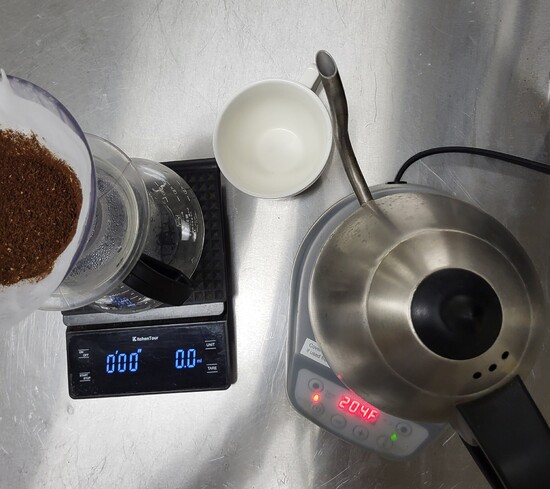 Water temperature controls how quickly flavor compounds dissolve from coffee grounds. Brewing water that is too cool can result in sour, underdeveloped flavors, while water that is too hot may emphasize bitterness and astringency.
Coffee extraction is most effective when water temperature is between 195°F and 205°F (90°C–96°C). Within that range, different coffees may perform better at slightly different temperatures depending on roast level and density.
Light roasts often benefit from slightly higher brewing temperatures because they are denser and more difficult to extract. Darker roasts may perform better at slightly lower temperatures.
The National Coffee Association and Specialty Coffee Association both identify proper brew temperature as a major variable affecting extraction quality.
5. Great Coffee Starts with Quality Beans and Expert Roasting
Great coffee begins with high-quality green coffee and skilled roasting. Defective beans, poor harvesting practices, improper processing, or careless roasting can create unpleasant flavors before brewing even begins.
Over-roasted coffee may taste smoky, burnt, or bitter, masking the bean’s natural character. Underdeveloped roasting can leave flavors grassy, peanut-like, or sour.
High-quality roasting aims to highlight the origin characteristics of the coffee — whether that means chocolate notes from Central America, berry flavors from Ethiopia, or earthy spice tones from Indonesia. To name a few of many possibilities.
Coffee quality standards developed by the Specialty Coffee Association emphasize defect reduction, proper processing, and roasting precision as critical elements of specialty-grade coffee.
Final Thoughts
Great coffee rarely happens by accident. Fresh beans, proper grinding, clean water, correct brewing temperatures, and skilled roasting all work together to create a memorable cup. When even one of these elements is ignored, quality suffers.
The good news is that small improvements can produce noticeable results. Better storage, a more consistent grinder, filtered water, or dialing in brew temperature can completely transform the coffee experience.
For coffee professionals and home brewers alike, excellence comes from understanding the details that stand between ordinary coffee and truly great coffee.
References
- Specialty Coffee Association — Coffee Freshness Handbook
- Specialty Coffee Association — Brewing Standards
- Coffee Science Foundation — Extraction Research
- Specialty Coffee Association Water Standards
- National Coffee Association Brewing Guidelines
- Specialty Coffee Association Green Coffee Standards
- Specialty Coffee Association Roasting Resources